Why Insurance ESG Strategies Are Losing Momentum: A Deep Dive into Regulatory Fatigue
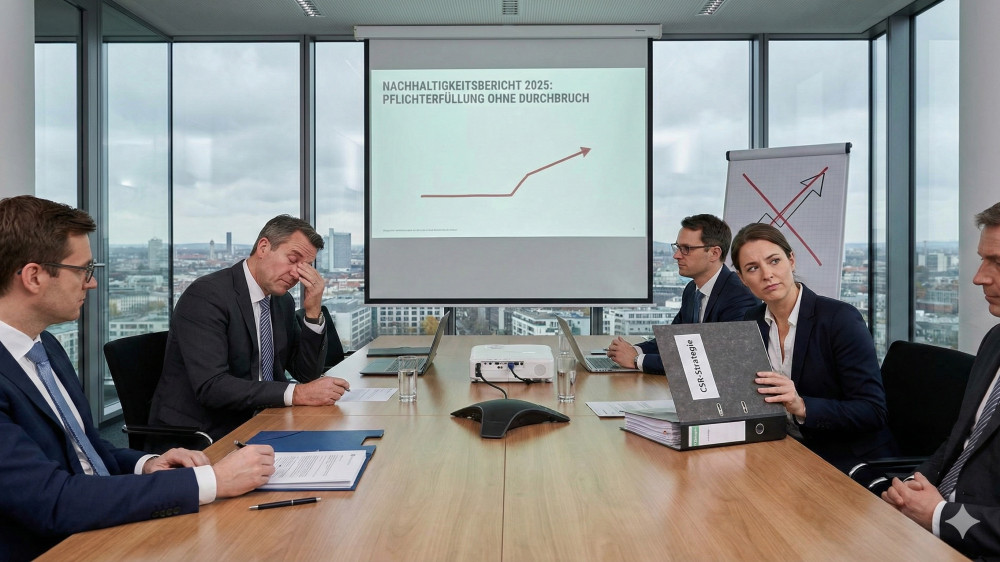
You might assume that sustainability (ESG) is now a core, accelerating priority for the insurance industry. After all, insurers are on the front lines of climate risk, managing trillions in investments that must align with a low-carbon future. However, a striking new reality is emerging: strategic momentum is stalling. According to the latest "Status Quo: Sustainability in the Insurance Industry" survey by the German Sustainability Network (GSN), what began as a wave of ambitious commitments is now hitting a wall of regulatory complexity, shrinking resources, and strategic fatigue. While ESG is firmly embedded as a compliance requirement, the vision of transforming it into a source of competitive advantage and innovation is fading. This shift has critical implications for sustainable investing, climate risk management, and the industry's role in the green transition.
The Data: A Clear Picture of Declining Momentum
The survey reveals several alarming trends indicating a loss of steam:
- Shrinking Human Resources: The average number of full-time employees dedicated to sustainability management has plummeted from 6.91 to 4.47 per company. Scaled per 100 employees, this is just 1.24 full-time roles. Furthermore, 72% of insurers have no plans to expand their sustainability teams, a sharp increase from 49% the previous quarter.
- Fading Strategic Importance: The perceived importance of sustainability for corporate success has dropped significantly, with an index score falling from 48 to 40 points. Notably, no surveyed company currently views ESG as making a "very large" contribution to success. Long-term optimism is also waning.
- Persistent Pressure in Investments: The one area of undeniable pressure remains the investment portfolio. A overwhelming 83% of insurers see "very high" or "rather high" need for adjustment in their capital allocation to meet ESG goals, with zero companies reporting low need. This contrasts sharply with operational units like claims management or IT, which feel comparatively little transformation pressure despite their role in physical climate risks.
The Core Problem: Regulatory Overload vs. Strategic Value
The survey identifies regulatory fatigue as a primary brake on progress. Insurers are drowning in a flood of complex, evolving requirements from frameworks like the EU's Sustainable Finance Disclosure Regulation (SFDR), the upcoming EmpCo directive (effective 2026), and taxonomies. The industry's sentiment is clear: these rules are increasingly viewed as a burdensome compliance exercise rather than a helpful guide for strategic decision-making.
This fatigue leads to risk-averse, check-the-box behavior. For instance, regarding new biodiversity requirements—a critical aspect of environmental risk—43% of insurers say it currently plays no strategic role for them. Many are hesitant to make sustainability-related marketing claims for fear of "greenwashing" accusations, opting for silence over proactive communication. The administrative burden is crowding out the capacity for innovation.
Analysis: The ESG Implementation Gap in Insurance
| ESG Dimension | Current Industry Status | Primary Challenge | Strategic Risk |
|---|---|---|---|
| Environmental (E) - Investments | High pressure to decarbonize portfolios; major adjustment needed. | Data scarcity, defining "green" assets, short-term return pressures. | Stranded assets; missing growth in green tech; reputational damage. |
| Social (S) - Underwriting & Operations | Lower perceived urgency; integrated into HR/CSR but not core underwriting. | Quantifying social risk; linking to pricing; diversity in supply chain. | Missing customer/market expectations; talent attraction issues. |
| Governance (G) - Compliance & Reporting | Heavy focus; large teams dedicated to disclosure and regulatory adherence. | Regulatory fatigue; complexity of overlapping frameworks; cost of compliance. | "Box-ticking" culture; failure to translate compliance into strategy. |
| Cross-Cutting: Climate Physical Risk | Growing claims from extreme weather; some risk modeling updates. | Pricing climate risk accurately; affordability of coverage in high-risk zones. | Underwriting losses in certain regions; potential for uninsurability. |
The Path Forward: From Compliance to Competitive Edge
For the insurance industry to regain momentum, a fundamental mindset shift is required. Sustainability must be reframed from a cost center and compliance headache into an engine for resilience and growth. This involves:
- Integrating ESG into Core Business Functions: Move beyond dedicated siloed teams. Underwriters need tools to price climate and social risk. Claims departments must adapt to new weather patterns. IT must enable green data centers and efficient processes.
- Leveraging Data for Advantage: Use ESG data not just for reporting, but to identify emerging risks (e.g., water stress in a region), develop new insurance products for the green economy (e.g., solar panel performance insurance), and engage proactively with clients on risk mitigation.
- Strategic Regulatory Engagement: Instead of passively implementing rules, leading insurers should actively engage with regulators to help shape pragmatic, effective standards that balance transparency with innovation.
- Focusing on Materiality: Prioritize efforts on ESG factors that materially impact financial performance and risk exposure—such as climate-related investment risks and liability from extreme weather events—rather than trying to excel at everything at once.
Conclusion: A Critical Inflection Point
The insurance industry stands at a critical juncture. The initial phase of ESG awareness and commitment is over. The current phase of regulatory implementation and resource constraints is proving difficult and demotivating. The next phase must be about strategic integration and value creation. The insurers that succeed will be those who can cut through the complexity, focus their diminished resources on the most material financial risks and opportunities, and rebuild a narrative where sustainability is not about exhaustion, but about ensuring their own—and their clients'—long-term survival and prosperity in a changing world. The alternative is a permanent state of compliance-driven stagnation.