The Rise of Fee-Based Financial Advice: A Transparent Alternative to Commission-Driven Models
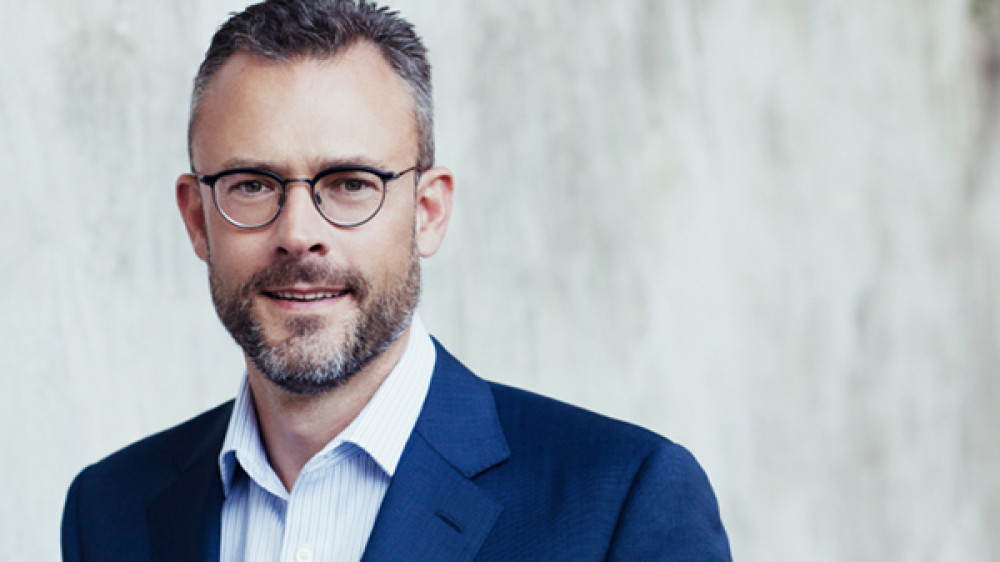
When you seek financial advice or investment guidance, how do you know your advisor is acting in your best interest? The traditional model, where advisors earn commissions from product providers, creates an inherent conflict. Karl Matthäus Schmidt, CEO of Quirin Privatbank—Germany's only bank exclusively offering fee-based advice—argues that a transparent, client-paid model is not only viable but superior. In this interview, he explains why fee-based financial planning is gaining traction, how regulations like MiFID II are increasing pressure on opaque models, and what the future holds for independent wealth management in Germany.
Debunking the "Free Advice" Myth
Q: Critics claim consumers aren't willing to pay for investment advice, as it's "free" at traditional banks. What's your experience?
A: The supposedly free advice from commission-financed banks is not free. Not everyone realizes this yet. For some, it seems like a higher hurdle to pay for advice directly rather than having the money taken "indirectly" through commissions. However, most people prefer a transparent fee over a hidden commission once they understand that independent advice leads to a better portfolio, lower overall costs, and potentially higher returns compared to a commission-financed bank.
The Challenge and Growth of Independent Advice in Germany
Q: Barely more than 300 fee-based advisors are registered in Germany, compared to 34,000 insurance brokers and over 50,000 representatives. Why has fee-based advice struggled here?
A: Direct banks also took time to establish themselves—today they are indispensable. Independent advice will develop similarly—it will become as successful here as it has been in the US for years. The term "fee-based advice" has a negative connotation—it sounds expensive, as if no one can afford it. Therefore, we use the term "independent advice" and emphasize the customer benefit. Furthermore, there is no level playing field between dependent, commission-financed "advice" and independent fee-based advice. Although MiFID II contributes to greater transparency, banks still have enough loopholes to continue receiving commissions. A commission ban would have been better. Nevertheless, we, as the only independently advising bank, are growing steadily. We manage over 3.3 billion in assets.
The Founding Vision: Aligning Advisor and Client Interests
Q: You founded the only bank in Germany that advises exclusively on a fee basis. Why did you start this bank?
A: Friends and acquaintances often asked me which bank I could recommend. The answer was always the same: "None!" Why? Because, in my opinion, conventional banks work against their customers' interests. They finance themselves through commissions received from fund and insurance companies. This creates a misincentive for advisors to sell what brings the highest yield, which is often not what would have been best for the customer. To break this dilemma, a different bank model, a different payment model, was needed. The idea for independent fee-based advice was born. Only if payment does not come from product providers is independence possible. Only then is the advisor free to select the best and most cost-effective products for the client.
Proving the Model and Drawing a Bio-Market Analogy
Q: How was your concept received?
A: Introducing this business model was a small revolution here. In other countries like the UK, some Scandinavian nations, or the US, independent advice is already firmly established. We have proven over the last eleven years that such a model works here too. Today, we manage 3.3 billion euros in client funds and serve over 10,000 clients at 13 locations. A 2016 survey we commissioned showed: 69% of investors want to move away from commission-oriented advice and can imagine paying an independent advisor.
Q: That reminds me of surveys on organic food. The vast majority are in favor, but at the checkout, organic products are still a clear minority...
A: That shouldn't obscure the fact that organic is a success model. Even in conventional markets, ecological products are a fixed component. Similarly, fee-based advice will establish itself in Germany. The advantages are obvious: with fee-based advice, the customer knows to the cent what they are paying for the advice. When we analyze commission-based portfolios, we find that the total costs—everything that accrues openly or hidden—are at least 3.0 to 3.5 percent. We can usually halve these costs. Not all investors know this yet.
The Impact of MiFID II and the Future of Advice
Q: MiFID II is supposed to bring stronger transparency regarding investment costs—does the directive deliver what consumer advocates hope for?
A: The implementation of MiFID II is an important step for investor protection. Banks and financial service providers are forced into significantly more transparency. They must now precisely disclose which costs occur in the investment (commissions, sales loads, management fees)—and this over the entire duration of the securities service, both at the distribution and product levels. Commissions remain permitted, but this new transparency increases pressure on expensive providers.
Q: How will fee-based advice develop in Germany over the next five to ten years, especially regarding consumer acceptance?
A: More and more banks recognize that a shift in consumer mindset combined with increasing transparency requirements makes commission-based distribution difficult. Accordingly, many players have been thinking about alternative business models for some time. The trend toward digitalization and the large offering of transparent online solutions for the self-determined, critical investor further drives this development. Therefore, I see more potential than ever for the growth of independent advice in Germany. Its market share could well grow to 20 percent or more in the coming ten years.
This interview highlights a fundamental shift in financial services. As investors become more cost-conscious and regulations demand greater transparency, the alignment of interests offered by true fee-only advisors presents a compelling path forward for effective retirement planning and asset management.